


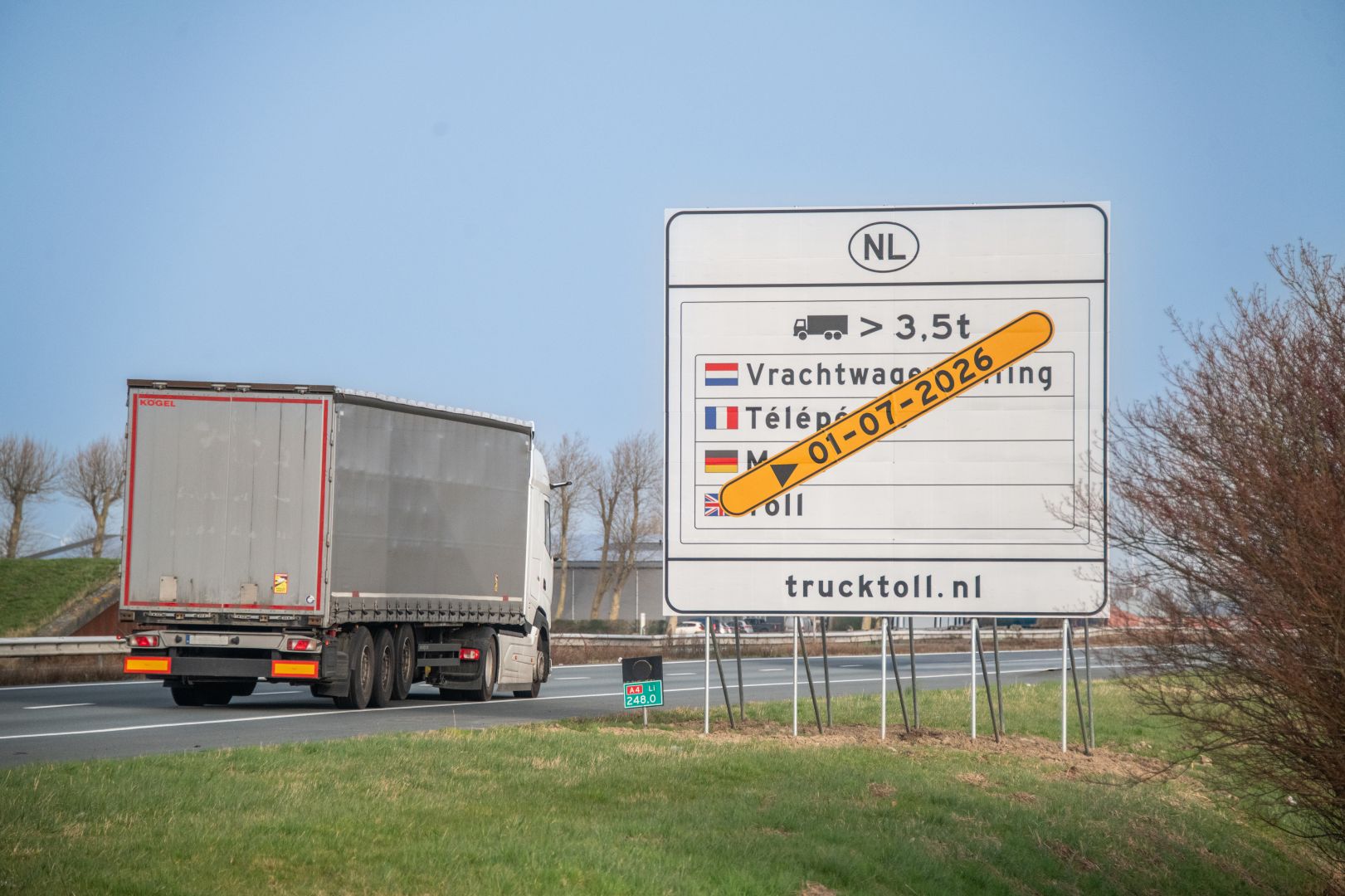
The Netherlands’ new truck toll is to be introduced on 1 July 2026. The toll applies to almost all Dutch highways and is applicable to domestic and foreign vehicles.
The toll has been introduced to make transportation sustainable and efficient. It is intended to stimulate investments in lighter and more environmentally sustainable vehicles.
Part of the revenue will contribute to subsidies for improving the sustainability of the sector.
The new charge replaces the Eurovignette which was a single charge dependent on emission class, axles and duration. The Eurovignette is still applicable in some countries such as Luxembourg and Sweden.
Trucks in N2 and N3 categories with a maximum authorised mass exceeding 3,500kg must have an Onboard Unit (OBU) to pay the toll. The OBU will calculate the distance travelled. Distance is charged per kilometre.
The rate per kilometre is based on maximum authorised mass, the C02 emissions class, and in some cases the EU emissions class.
To obtain the OBU the Netherlands has two types of providers:
- EETS which works in other countries in addition to the Netherlands, which also implement a toll for trucks. OBUs from Germany and Belgium, Toll Collect and Satellic, will not apply in the Netherlands.
- NedLinq works for the Netherlands only.
Many foreign trucks will already have OBUs, which service providers will be able to extend service for. Trucks without an appropriate OBU installed will incur a fine.
To calculate the rates and for more information: visit www.trucktoll.nl.