


Protectoseal’s Anand Palanivelu outlines how conservation vents can help storage terminals achieve net zero targets and reduce hazardous gases
Storage tanks used for chemicals, petroleum products, and other volatile liquids, often experience changes in internal pressure due to temperature fluctuations, filling, and emptying cycles. As liquids expand or contract, vapour build-up can occur, creating excess pressure within the tank. If unchecked, this can lead to fugitive emissions, contributing to air pollution, ozone depletion, and climate change.
Importantly, many of these emissions consist of volatile organic compounds (VOCs), which are hazardous to both the environment and human health. Regulatory agencies, such as the Environmental Protection Agency (EPA) and local environmental bodies, have set strict limits on emissions from storage tanks, making it imperative for operators to find effective ways to control and minimise the release of these gases.
Controlled Release
Conservation vents from Protectoseal are designed to provide a controlled release of tank vapours, while preventing harmful emissions from escaping unnecessarily. These vents work by maintaining the pressure balance inside the tank, minimising the risk of over-pressurisation or vacuum conditions that could lead to leaks or even tank rupture.
Conservation vents are typically installed on fixed-roof storage tanks and are engineered to maintain a tank’s vapour space, despite fluctuating temperatures and pressure. The pressure settings on Protectoseal’s conservation vents are finely tuned, ensuring that emissions only occur when the internal pressure or vacuum reaches predetermined levels, thus limiting fugitive emissions.
Reducing Emissions
Protectoseal’s conservation vents are engineered to exceed the stringent global environmental standards. The products allow ‘no detectable’ emissions (less than 500 parts per million) from low pressure storage tanks that contain VOCs, exceeding the standards set by the EPA.
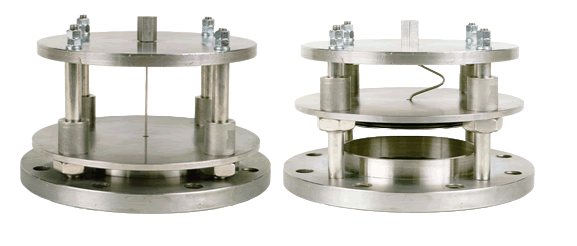
One example is the PIN-TECH Bubble- Tight Pressure Relief vents, mounted to the vapour space flange connection of a storage tank or vessel. The vents employ a buckling pin to hold the vent piston closed, with zero leakage up to the relief set point. The pin is an accurately machined, straight metal rod, configured to precisely sense transmitted axial forces that are generated because of tank pressure. The force required to buckle the pin is governed by Euler’s Law and is a function of the pin’s metallurgy, length, and diameter. An exact buckling force can be determined for any specific pin configuration.
When the pressure in the tank reaches the vent set point, the axial force is sufficient to buckle the pin, and the vent sealing piston is allowed to move to its full open, relieving position. The pin buckles completely and instantaneously.
Protectoseal’s 3908-SL Pressure and Vacuum Relief Thief Hatch offers similar protection from emissions as well as easy access to the tank interior for inspection, gauging, or sampling operations. The unit also provides pressure and vacuum relief of the tank’s vapour space through integral, spring-loaded pressure and vacuum relief mechanisms. Vents open and close to permit only that intake or outlet relief necessary to keep interior pressure within permissible working limits.
The innovative design includes an ‘air- cushion’ pallet to deliver a low leakage performance of no more than 0.1 m3/ hr at 90% of the set pressure. With an automatic condensate drainage design, protective measures are in place to mitigate freezing, binding, and clogging.
Global Focus
With an increasing global focus on climate change and air quality, regulatory agencies are now imposing heavy penalties for non-compliance, making the reduction of VOC emissions paramount. Conservation vents enable operators to store volatile liquids safely without contributing to environmental degradation by only venting when necessary, maintaining the integrity of the stored materials, and preventing loss of product through unnecessary evaporation.
The storage tank industry is faced with the dual challenge of ensuring safety and reducing environmental impact. With the right equipment, operators can now regulate tank pressure while also preventing unnecessary emissions. These devices not only help storage facilities comply with environmental regulations but also enhance safety, reduce product loss, and contribute to sustainability efforts.