


Hans Bobeldijk, CEO of UAB-Online, discusses what useful data sharing is in port call operations, and how operators can achieve this
A berth can be available while the tank needed to receive a cargo is not. A surveyor can be booked against an arrival time that has already changed. For terminal operators, these mismatches expose the gap between having information and being able to use it.
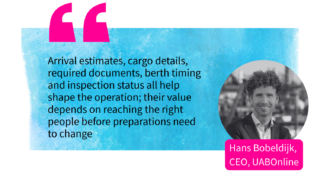
Useful data sharing means giving the people preparing a port call current information they understand and can act on. Arrival estimates, cargo details, required documents, berth timing and inspection status all help shape the operation; their value depends on reaching the right people before preparations need to change.
Take an illustrative example: a vessel’s expected arrival slips from morning to afternoon. The master or designated representative issues a revised estimate, specifying the arrival point and time zone. The terminal checks the implications for berth allocation, tank availability and staffing. The agent reviews service arrangements, while the surveyor reassesses attendance and outstanding inspection documents. Ultimately, what matters is the response. Each party needs to...
What useful data sharing looks like in port call operations