


Dave Ward at Wardz Consulting looks at the revision of EN 14620 and what it means for the tank storage sector
EN 14620 is the European Standard that deals with all aspects of the design, construction, testing and commissioning of vertical, cylindrical, tanks for the storage of refrigerated liquified gases (RLG’s). The development history extends back 70 years and the time-line is shown in Figure 02.
A full revision of EN14620 was commissioned by CEN (European Committee for Standardisation), in 2015 it is currently managed by Technical Committee CEN TC265/ Working Group10, which Dave Ward convenes. The aim of the revision is to update the suite of standards to reflect developments and current practice. This includes, where possible, incorporating changes brought about by the major revisions to the 2nd Generation of Eurocodes. The Committee is made up of members from eight of the 34 European countries participating in CEN.
The official title of EN14620 is quite a mouthful: ‘Design and manufacture of site built, vertical, cylindrical, flat bottomed steel tank systems for the storage of refrigerated, liquefied gases with operating temperatures between 0°C and -196°C’.
The new standard will be increased from five original parts, to seven.
Part 1 - General
Part 1 is the ‘umbrella’ standard to the suite of seven parts and was therefore, the first to be developed and was published in 2024. It has been given a major overhaul and expanded, to provide more information and guidance to the user. Changes include:
- The number of definitions has been expanded and the list rationalised.
- Types M1 and MCC membrane tanks, have been added.
- Greater guidance for assessment of risk, for site selection and containment systems essential to mitigate RLG risks.
- New Annex E: Recommendations for geotechnical investigations and seismic hazard evaluation. To encourage improved FEED stage information provision.
- Concrete-Concrete tanks excluded from the scope.
- Inclusion of ‘aftershock level earthquake’ (ALE), considered, but not adopted.
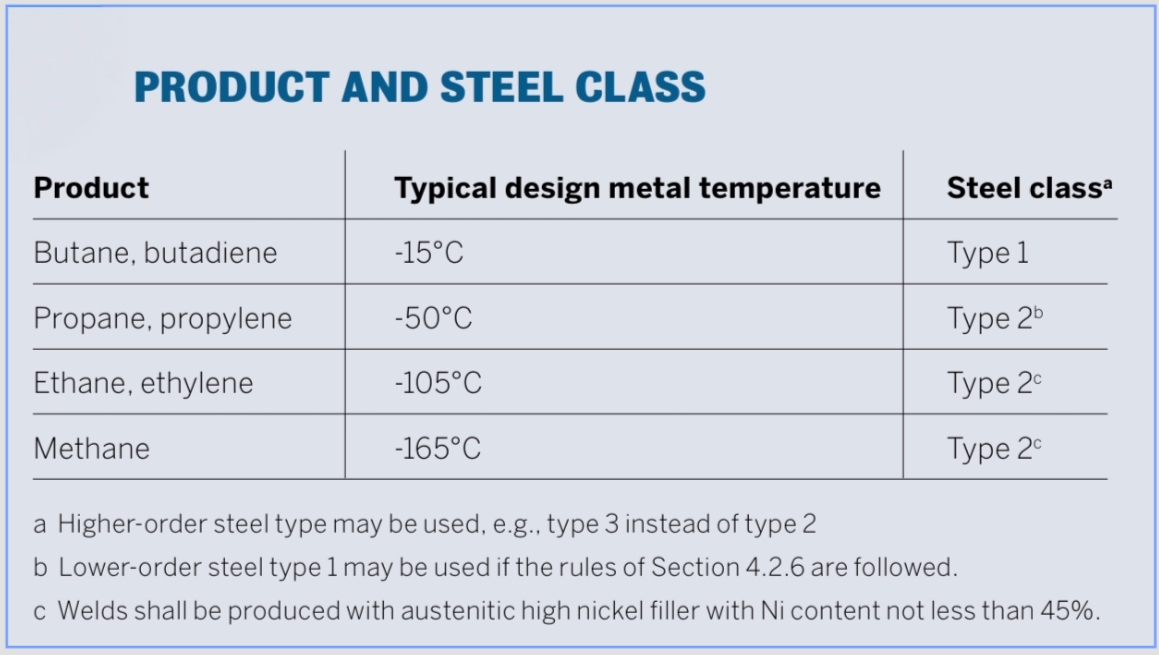
Figure 1: Product & Steel Class (extract prEN 14620-Part 2:2025)
Part 2 - Metallic Components
Part 2 has undergone the most significant change of all the seven EN 14620 parts. In the new draft prEN 14620-Part 2, the principal design method has been transformed from ‘allowable stress’ to ‘limit state’ (except for Membrane) in order to comply with Eurocode principles. Reference is made to EN 1993 (Eurocode 3). This changes a 70-year international tradition, in the design of metallic components of RLG storage tank systems. ‘Crack arrest concepts’ introduced in the earlier specifications have also been included to enhance material safety.
The standard is still based on the allowance of only ‘P-grade’ pressure vessel steels, to EN 10028, to be used in contact with RLGs. These steels have superior properties suitable for low temperature use with enhanced resistance to crack development and brittle fracture. Steel classification has been updated to be independent of containment type.
- Type 1 steel: low temperature carbon manganese steel.
- Type 2 steel: nickel alloyed steel (e.g. 9%Ni).
- Type 3 steel: austenitic stainless steel.
For each product, the steel types shall be in accordance with Table 01 below. Other changes include updated toughness requirements, a complete revision of nozzle details, and a change in weld examination acceptance criteria from US to EU standards. In addition, three new annexes have been introduced: Annex A, which covers drop weight testing of the HAZ, Annex B, which covers wide-plate crack arrest testing, and Annex C, which provides typical examples of combinations of actions.
The revision of EN 14620 has occurred in parallel with the huge development programme for the 2nd Generation of Eurocodes. This has required much liaison with several related Eurocode committees, but has unfortunately left a number of unresolved conflicts. Until 2022, there was agreement that EN 14620 was not subject to the rules of EN 1993-4-2. Without warning, EN 1993-4 2’s Technical Committee extended its scope to the design of RLG storage tanks under the auspices of CEN/BT Decision C36/2014. In the interests of safety, it is strongly recommended by the author that EN 14620 continues to be used for as primary design basis for RLG storage systems. It is suggested that EN 1993 4-2:2025 is not used in its current form. Doing so could lead to unsafe design and construction, including the use of unsuitable steel materials. In particular, the use of S-Grade structural steels to EN 10025 is totally inappropriate and potentially dangerous when in contact with RLGs. This view is shared by International and European experts with hundreds of years of collective experience in RLG storage system design and construction. It is therefore strongly recommended that EN 14620 continues to be used by clients, contractors, and designers as the only safe standard for RLG storage system design. It is hoped that several conflicting issues in EN 1993-4-2 can be resolved in time.
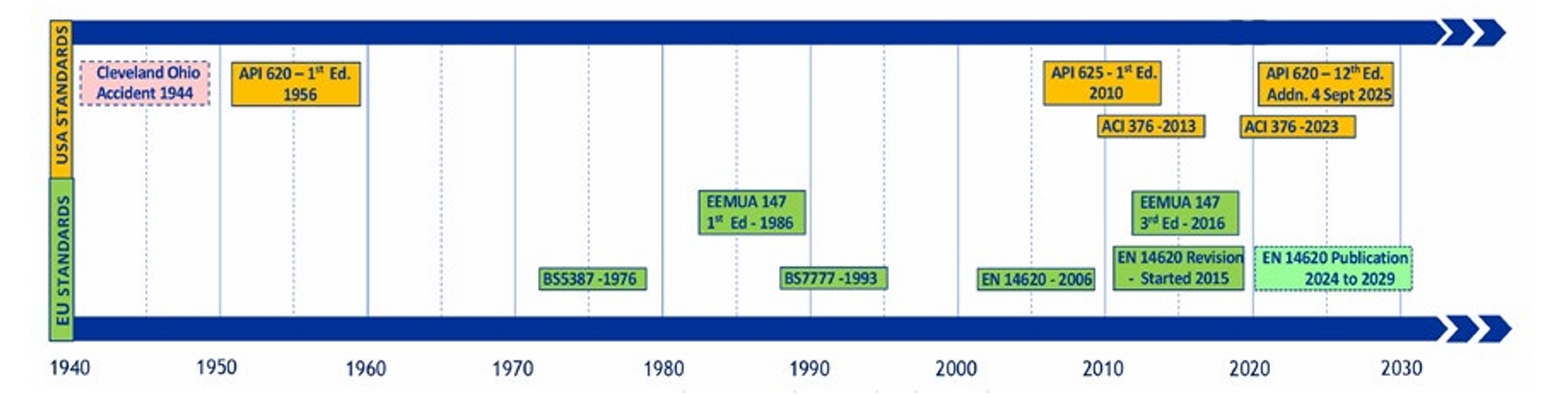
Figure 2: History of RLG tank standard development
Part 3 - Concrete Components
Part 3 has been expanded as part of a major overhaul. A review of related documents, EEMUA 147-Edition 3- Recommendations for refrigerated liquefied gas storage tanks and ACI Code-376-23: Refrigerated Liquefied Gas Containment for Concrete Structures have been undertaken. Relevant content has been adopted in the new part 3, along with best practice recommendations by members. These include:
- Material requirements clarified and detailed.
- ULS and SLS load combination tables added.
- Analysis approaches and models specified.
- Tables for SLS and ULS criteria added.
- Rules for membrane tank design clarified.
- Thermal protection systems (TPS) embedment requirements expanded.
- Construction & supervision specification added.
- New informative annex with tolerances recommendations added.
- The preliminary document prEN 14620 Part 3:2025 is undergoing internal review and comment. It is likely to be the last of the suite to be published.
Part 4 - Insulation Components
Part 4 was published in 2025 and it has had a significant overhaul, referenced standards updated and new European Standards for insulation introduced. Changes include:
- Consideration of fire resistance & behaviour developed and clarified.
- Requirements for insulation for penetrations and internal piping introduced.
- Requirements for polymeric vapour barriers updated.
- Annex B: test methods updated.
- New annex C: testing of brittle materials added.
- New Annex D: non-metallic thermal protection systems added.
- Membrane tank requirements expanded.
Part 5 - Testing, Drying, Purging and Cool-Down
Part 5 was published in 2025 and has undergone a full review and improved guidance provided in key areas. Changes include:
- Permitted use of small temporary safety opening in primary steel liquid container after hydrostatic test added.
- Negative pressure test details clarified, including for double-wall, double-roof tanks.
- Guidance on purging of the bottom insulation space clarified.
- Guidance on decommissioning tanks expanded and improved.
- New Annex B: Global test for membrane tanks added. (Informative).
- New Annex D: Requirements for non destructive examinations (NDE) of steel containers, supplementary to Table 14 EN 14620-2:2006 (Normative).
Part 6 - Specific Requirements
Part 6 is a new standard. It depends on prEN 14620-2:2026 for its primary design rules and EN 14620-1 to 5 for other general requirements. As its title suggests, part 6 provides additional, specific requirements for these three ‘air gases’ liquid nitrogen (LIN), liquid oxygen (LOX) and liquid argon (LAR). Due to the addition of these gases in to EN 14620, the temperature range of the new suite of standards has been extended from 0°C to -165°C, to -196°C, the boiling point of LIN.
Part 6 effectively, contains a series of modifications to deal with the peculiarities and specific requirements of LIN, LOX and LAR, compared with the other, hydro carbon based RLG’s. prEN 14620-Part 6 is currently undergoing a review of internal comments and it is hoped to submit the Enquiry Draft to BSI later in 2026.
Part 7 - Specific Requirements For Anhydrous Ammonia
Part 7 is a new standard. It also depends on prEN 14620-2:2026 for its primary design rules and EN 14620-1 to 5 for other general requirements. Part 7 provides additional, specific requirements for ammonia storage systems where they differ from the other RLGs. Anhydrous ammonia can be highly toxic under ambient conditions, aggressively reacts with certain metals and can induce stress corrosion cracking (SCC) in metallic storage tanks, under certain conditions. The Standard provides guidance on:
Dave Ward will be speaking at the International Conference Cyrogenic Storage Tanks on 23 & 24 April in Erding, Germany. Visit www.tuvsud.com to find out more.