
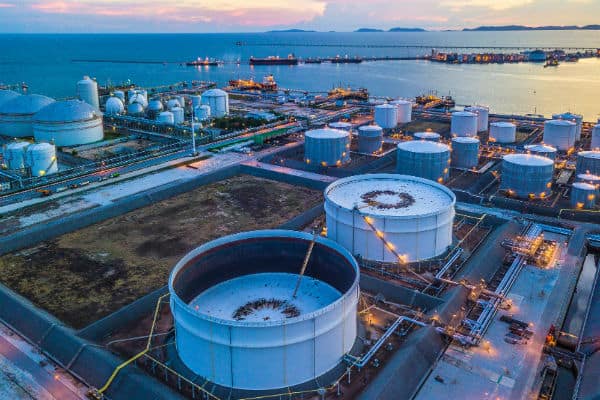
Matrix Service Company, a leading provider of engineering and construction services to the energy and industrial markets, has announced that its subsidiary, Matrix PDM Engineering, has signed an exclusive Memorandum of Understanding (MoU) with Tissot Industrie, headquartered in Podensac, France, to offer total engineering, procurement, and construction (EPC) solutions for liquid hydrogen storage across the United Kingdom, Norway, Switzerland, and the European Union.
Matrix Service Company president and CEO John Hewitt, says: ‘We are excited about the significant role Matrix, together with Tissot, will play in building out the infrastructure needed to meet an enormous global demand for hydrogen. This partnership marries Matrix PDM’s unrivalled expertise in cryogenic engineering and technologies with Tissot’s world-class international construction expertise to provide complete solutions for customers across Europe that are seeking storage and terminal solutions to support their hydrogen ambitions.’
Tissot Industrie president, Gérard Tissot, says: ‘We are confident that this partnership will enhance our contribution towards the new energy transition in the markets where we operate. With this partnership, Tissot brings its experience of over 650 spheres including design, fabrication, and erection. Together we will bring the highest standards and expertise from both companies to deliver the best in class to the hydrogen sector.’