

Hanna Lundin, product manager at Emerson, explains how the Rosemount 2405 Monitoring Hub is making it more feasible to automate tank monitoring operations
In the modern digital age, you might expect the tanks and terminals industry to be embracing the latest technologies to help improve safety, operational efficiency and profitability. According to the 8th edition of The Global Remote Tank Monitoring Market, a report published in December 2025 by the independent industry research and analysis firm Berg Insight, around 11.3 million storage tanks globally were equipped with active remote tank monitoring systems by the end of 2024. This figure reflects consistent growth in the adoption of automated and connected monitoring technologies. However, with tens of millions of storage tanks estimated to be in operation worldwide, it is clear that a substantial percentage, perhaps even a majority, are still relying on manual monitoring methods.
This increasingly conflicts with the operational demands facing companies. Storage facility operators are typically under pressure to maximise asset utilisation, increase throughput, improve safety performance and meet stringent regulatory requirements, often while managing ageing infrastructure. In this environment, limited visibility into tank status does not simply impact efficiency, but becomes a constraint on performance, flexibility and resilience. It is therefore important to understand the role of automated tank monitoring, why the adoption of automated systems has historically been uneven, and how newer system designs are addressing long standing barriers to adoption.
Safety Implications of Automated Tank Monitoring
Accurate and timely knowledge of inventory levels, temperatures and wider operating conditions, such as pressure, vapour space behaviour and abnormal trends, is essential for safe operations. Manual measurement methods, such as dipping with a gauge stick or visually inspecting sight glasses, provide only periodic snapshots of tank status. Between these checks, changes in level or operating conditions can occur unnoticed, increasing the risk of overfills, leaks or vapour releases. Automated tank monitoring addresses this limitation by providing continuous level, temperature and pressure measurements in real time, enabling operators to identify deviations from normal operating conditions as they develop. Furthermore, manual measurement often requires personnel
to access tanks physically, sometimes at height, in exposed locations, or in adverse weather – all of which introduces risk. Automated monitoring significantly reduces the need for routine physical access, helping strengthen safety performance. In an industry where safety metrics are closely scrutinised, this risk reduction is a compelling driver for automation.
Improving Operational Efficiency and Flexibility with Automated Tank Monitoring
Operational efficiency is another key area in which automation delivers value. The real-time inventory visibility provided by automated tank monitoring facilitates faster and better-informed decisions. It supports smoother coordination between operations, logistics and commercial teams, allowing more effective response to changes in vessel schedules, customer requirements or market conditions. Automated monitoring also supports more efficient use of storage capacity.
By providing a clear, up-to-date picture of available space across tank farms, operators can optimise allocations and reduce the risk of bottlenecks. This is increasingly important as terminals diversify into new products which may have different storage requirements and turnover rates. In this context, automation becomes an enabler of operational flexibility.
Commercial and Financial Performance Improvements with Automated Tank Monitoring
Inventory accuracy also has direct commercial implications. Overstocking ties up working capital and increases storage and insurance costs, while understocking can disrupt customer supply and lead to contractual penalties or lost revenue. While manual tank monitoring methods introduce uncertainty into inventory figures, automation provides more reliable data, supporting better planning and forecasting. This enables operators to reduce buffer stock without increasing risk, freeing up capacity and capital.
Accurate, timely data also supports billing and inventory verification processes. Discrepancies between recorded and actual volumes can lead to disputes, administrative overheads and reputational damage. Automated monitoring ensures consistent and auditable volume data, supporting efficient commercial operations and smooth customer relationships.
How Automated Tank Monitoring Boosts Compliance and Environmental Performance
Regulatory compliance is another major driver for automated tank monitoring. Regulators expect accurate records and traceable data but manual record keeping is inherently vulnerable to error, inconsistency and omissions. Automated tank monitoring systems generate continuous, time-stamped data that supports auditability and traceability, helping organisations meet their reporting obligations more efficiently. Environmental performance is also under growing scrutiny, as spills, leaks and emissions can have significant environmental and reputational consequences. Automated tank monitoring supports early detection of abnormal conditions, reducing the likelihood of incidents and enabling faster response when issues do arise.
Why Manual Tank Monitoring Persists
Given the multiple clear benefits of automation, why then is manual monitoring still widespread? Traditional automated tank monitoring systems have often been perceived as complex, involving multiple instruments, communication gateways and protocol configurations, and requiring specialist expertise for installation and maintenance. For companies with limited automation resources, this complexity can be daunting.
Cost considerations also play a role. While the long-term return on investment from automation is well understood, the upfront capital expenditure required to retrofit existing sites can be difficult to justify, particularly for smaller operators or facilities operating on thin margins.
Integrating new monitoring technologies into these environments can appear risky or disruptive, reinforcing a preference for familiar manual methods despite their limitations.
Integrating into Traditional Architectures
From a technical standpoint, automated tank monitoring systems are well established, with a conventional architecture typically including level, pressure and temperature transmitters installed on tanks to provide critical measurement data. These measurement instruments feed into a local data concentrator, which may also offer a field display so that technicians can view tank status. A separate communication unit then transfers the data to control systems or inventory management platforms using industrial protocols such as Modbus or HART. Together, these components provide full visibility of storage assets, from field to enterprise level, while historical data logging provides a valuable record for audits and forecasting. While effective, these architectures can become complex as systems scale, with each additional tank or instrument introducing new wiring, configuration and communication requirements.
The Benefits of Automated Tank Monitoring Hubs
To make the adoption of automated tank monitoring systems more feasible, Emerson has developed the Rosemount 2405 Monitoring Hub. By consolidating the functions of a data concentrator, communication unit and local display into a single unit, this device significantly simplifies tank monitoring system architectures by reducing the number of components required.
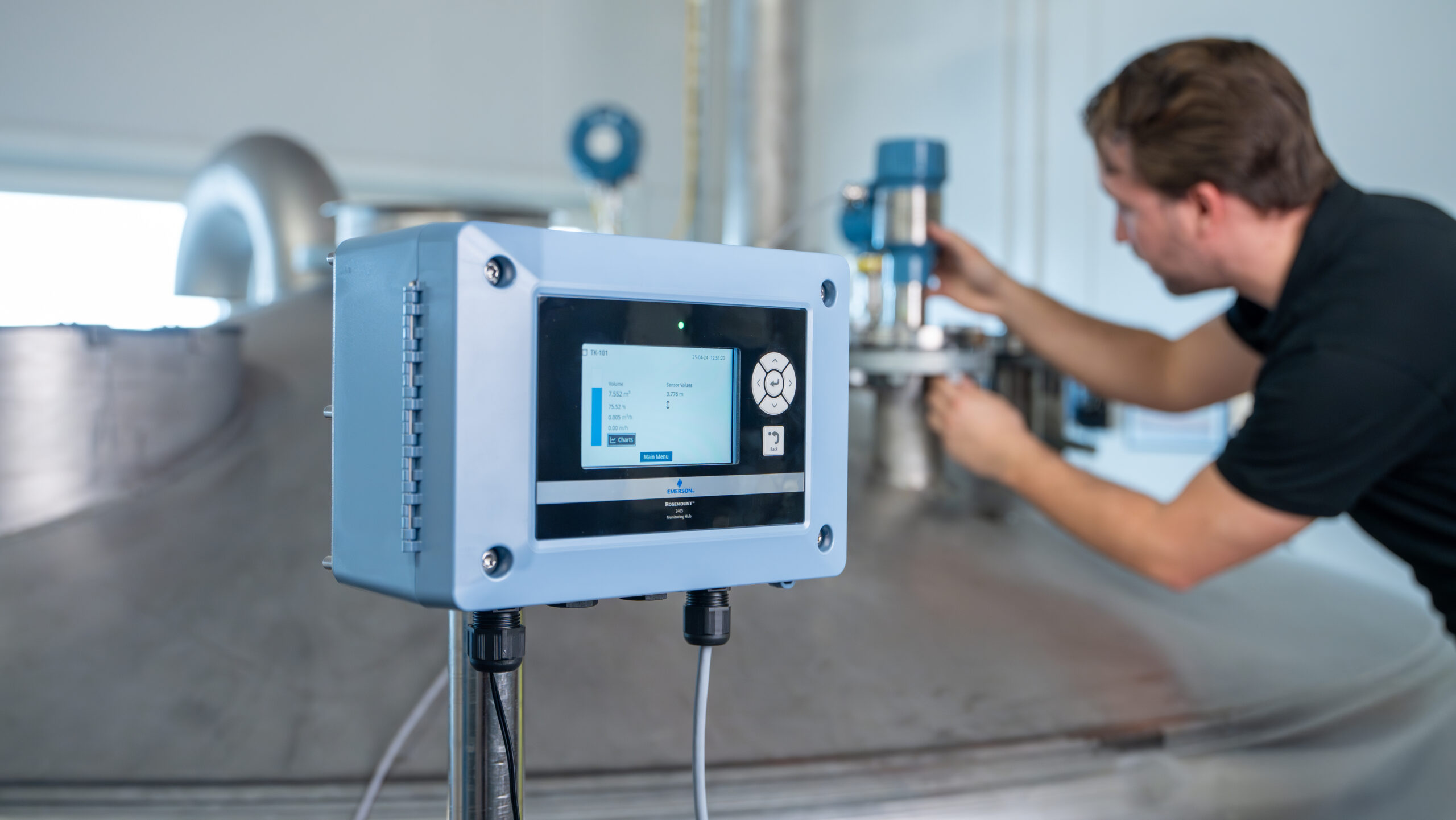
In traditional automated tank monitoring set-ups, each device typically communicates independently with the control system. This requires multiple wiring runs, protocol converters and separate power supplies. The Rosemount 2405 instead brings together all these connections in a single centralised location. They gather data from multiple field devices and communicate the information upstream through a single interface. Simplifying the system architecture in this way means that rather than having to configure and maintain dozens of separate communication channels, operators and engineers need to manage only one.
A simplified system architecture creates significant practical benefits, including reduced wiring complexity, and faster installation and commissioning. System expansion becomes more straightforward, allowing additional tanks or instruments to be integrated with minimal disruption. This makes it easier to modernise incrementally rather than through large, one-off projects.
By making real-time measurements of level, flow, volume and tank utilisation available both locally in the field and centrally in the control room, tank monitoring hubs enhance visibility across operations. They provide robust and adaptable connectivity to control systems and inventory management platforms, allowing seamless integration with third-party host systems such as distribution control systems, programmable logic controllers, SCADA platforms or manufacturing execution systems.
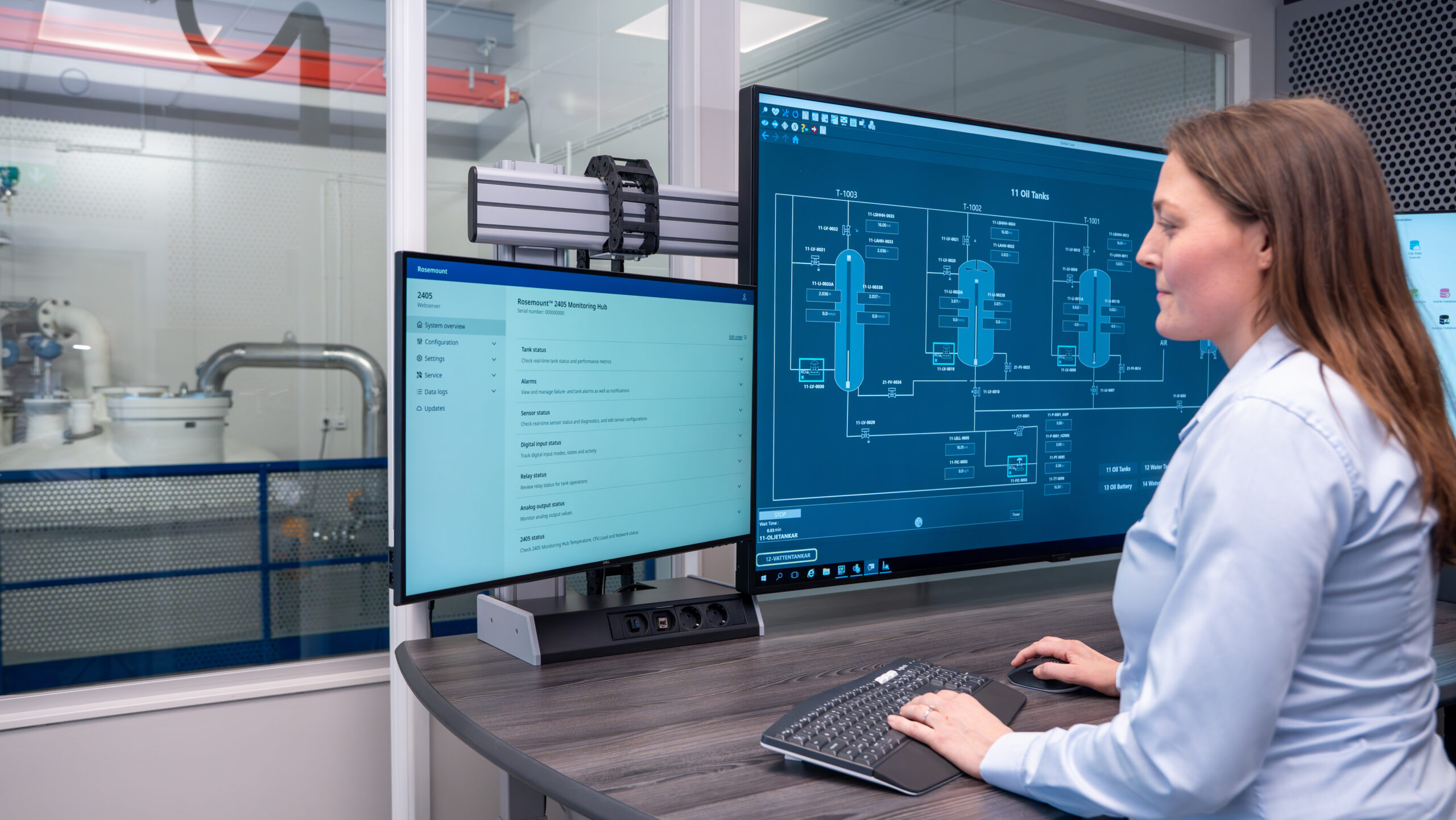
Integrating tank data into existing control and management systems helps organisations shift away from reactive inventory management towards a more proactive, data-led approach. The result is improved efficiency, enhanced operational safety, lower operating costs and stronger regulatory compliance.
Making Tank Monitoring Easy
Ease of use has become a defining requirement for modern tank monitoring solutions, particularly in environments with limited automation expertise. The Rosemount 2405 reflects this shift in design philosophy, incorporating features such as configuration tools to guide technicians step by step through commissioning. This guidance makes the procedure quicker and easier, reducing the need for expert assistance. This is especially vital when dealing with varied configuration procedures, communication protocols and data formats that make integration more complicated. Because the device’s graphical field display allows operators and technicians to view tank status directly on site, this supports routine checks and enables faster troubleshooting.
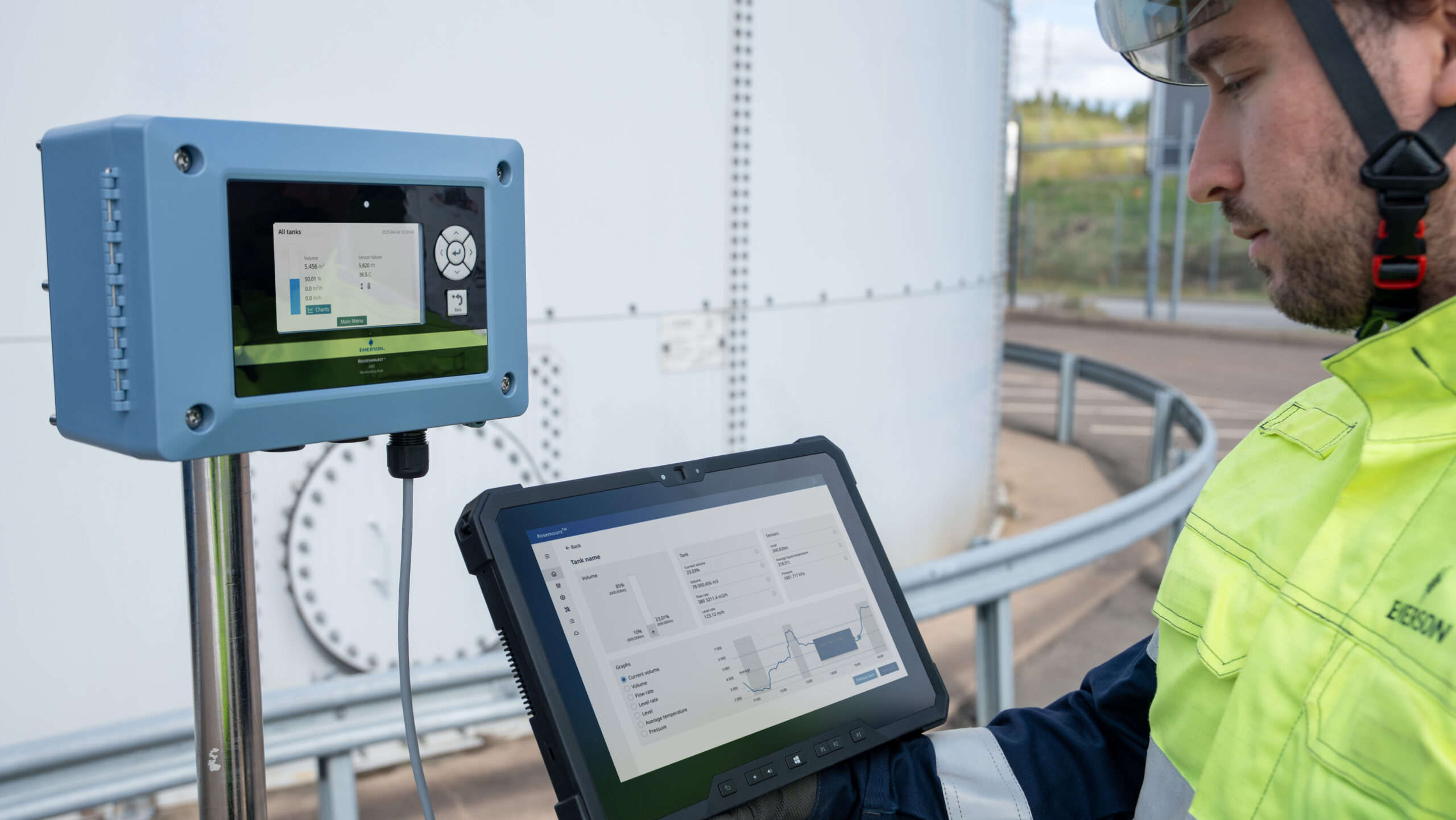
Features such as QR-coded asset tagging provide direct access to documentation and support resources. This improves response times when issues arise and supports predictive maintenance strategies, so that problems can be fixed before they result in downtime. By consolidating multiple functions into a single device, tank monitoring hubs also simplify long-term system management. Fewer components and interfaces makes systems easier to understand and maintain over time. For companies facing workforce constraints and skills shortages, this simplicity is increasingly valuable.
Why Choose Automated Tank Monitoring
Automated tank monitoring is firmly established as a best practice, yet its adoption across the tank storage sector remains uneven, with many facilities still relying on manual methods due to concerns over the perceived cost and complexity of automation. Tank monitoring hubs simplify system architectures, making it more feasible for organisations to adopt automated solutions. This then enables them to optimise their inventory management, increase their operational efficiency and throughput, enhance site and worker safety, strengthen regulatory compliance, reduce costs and boost profitability.