
Project developer Green Energy Park (GEP) has revealed plans to build a renewable ammonia facility in Piauí, Brazil, for exports to the proposed import terminal on the island of Krk, Croatia.
GEP signed a letter of intent (LO) with the state of Piauí, Brazil, for the production and export of an initial 1 million tonnes of ammonia from renewable energy sources. The LOI was signed on October 11, 2023, at the World Hydrogen Congress in Rotterdam.
The project developer intends to build its first 5 GW upstream renewable ammonia production and export facility in Piauí to supply its global distribution network with an initial focus on European end markets. The Piauí plant will be the first of a minimum of eight giga-watt upstream facilities.
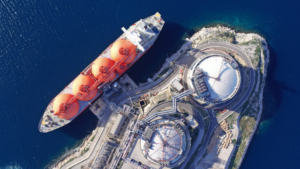
Green Energy Park Krk has a total capacity of 10 million tonnes of ammonia import, storage, and distribution per year, featuring a deep-water seaport, terminal facilities, storage assets, and a solar energy park.
The staged development programme will start ammonia trading through on-site bunker vessels, operating as a storage hub, until the completion of the first 100,000 m3 purpose-built ammonia storage tank expected for mid-2027.
Once completed, the facility will also be able to supply the industrial heartlands of Northern Italy, Southern Germany, and surrounding regions, with the equivalent of about 1.8 million tonnes of hydrogen per year.