



Find out how NevadaNano’s automated emission detection solution is providing real-time data and boosting operational efficiency
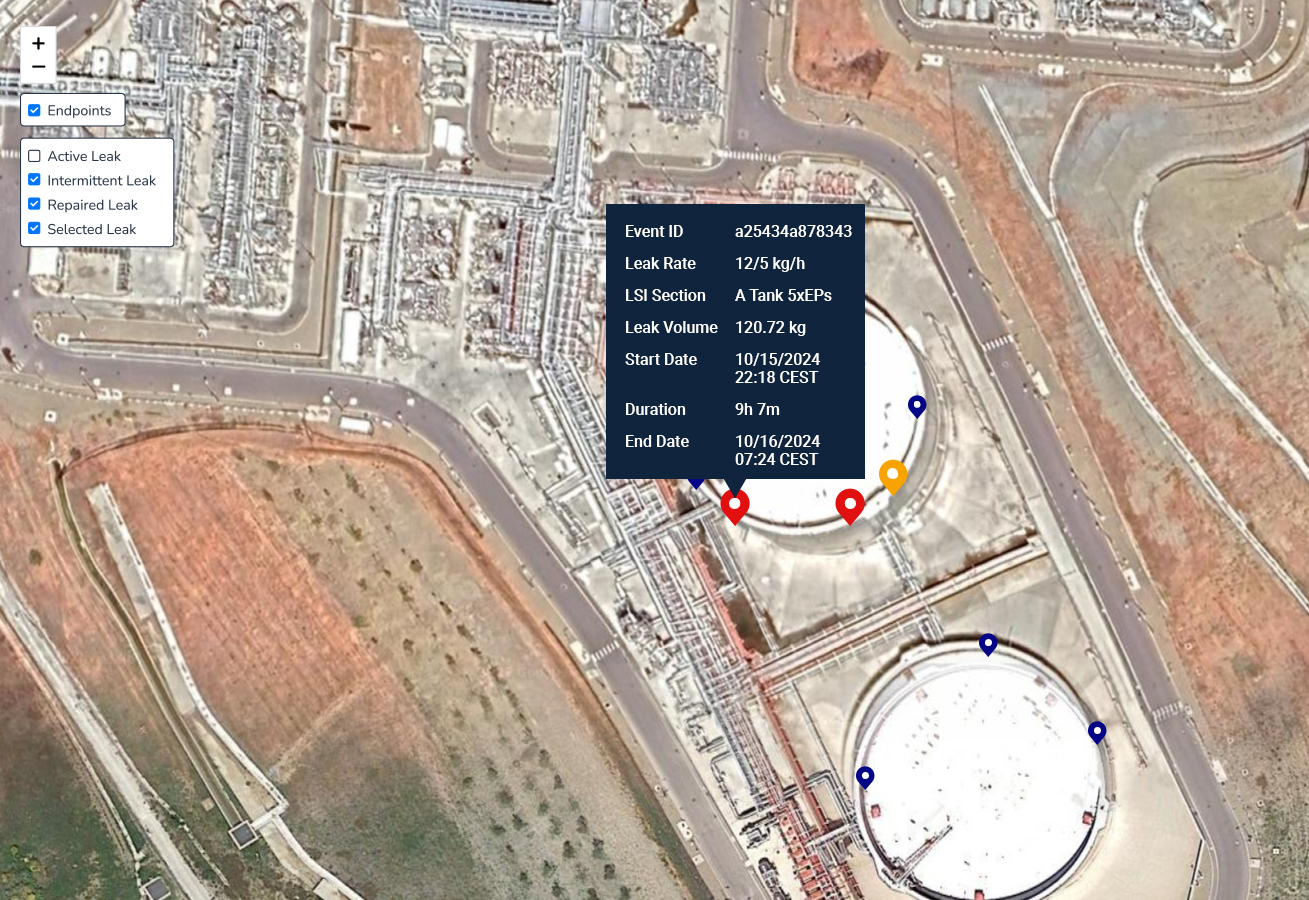
Emission quantification and location alert details
As the oil, gas, chemicals, and renewables industries continue to focus on reducing their environmental
impact, leak detection and emissions control have become essential aspects of operational efficiency. In the face of increasing regulatory requirements, terminal operators and facility managers must balance production goals with efficient and accurate emissions control. The need for real-time data is urgent, as delayed detection of methane and hydrogen leaks can result in costly fines, increased safety risks, and operational inefficiencies.
NevadaNano’s automated continuous emissions monitoring system, designed for real-time detection of methane, hydrogen and total emissions, are helping companies rise to these challenges. By utilising NevadaNano’s proprietary gas sensor technology, combined with proprietary cloud software that calculates the location and size of emissions, the automated system ensures highly accurate, continuous monitoring, reducing the risk of leaks and improving compliance with environmental standards. This article explores two critical applications — floating roof tanks and thief hatches — and how customers have benefited from automated emissions detection.
Thief Hatch: Remote Continuous Monitoring
The Challenge: Like many oil and gas upstream sites, the customer’s location is in a remote area, which makes leak detection and repair (LDAR) both challenging and intermittent. The customer’s LDAR process was manual, requiring technicians to conduct regular site visits for visual inspections and use vehicle-mounted gas detection devices to identify potential fugitive emissions. Each trip to the site took 2.5 hours one-way. Upon arrival, the technician would drive the vehicle along a pre-determined route or grid pattern to cover the entire site. If a leak was detected, the technician would use a handheld portable device to try to pinpoint the leak’s source. However, in many cases, the technician was unable to locate the leak before the return trip was due, requiring another visit to continue the investigation. Once the source was identified, technicians could either perform the repair or return with the proper equipment to complete the work. Each visit consumed several hours of travel time, making the process inefficient and costly. This led to delays in repairs and missed opportunities for early leak intervention.
The Solution: NevadaNano’s automated continuous emissions monitoring system provided a transformative solution by enabling remote, continuous monitoring of methane emissions. Six endpoints were installed on the tanks, adjacent to the thief hatches (see figure 01). Once the system was online, it immediately notified the operator of a leak at one of the thief hatches, providing both the location and size of the leak. This information allowed repair teams to be directed to the precise problem area, reducing on-site time and significantly accelerating repair efforts.
The Results:
• Remote continuous monitoring: The system allowed for continuous, remote monitoring, eliminating the need for intermittent on-site visits and reducing the time spent on manual inspections.
• Precise leak location and real-time alerts: NevadaNano’s proprietary cloud software that calculates the location and size of emissions pinpointed the leak’s exact location, directing technicians swiftly to the area, cutting down on time spent searching.
• Prioritised and faster repairs: With real-time alerts showing the quantification of emissions and clear instructions on the leak’s location, repair teams were able to prioritise their activities based on the most pressing leaks and conduct repairs more quickly, minimising downtime and reducing operational costs.
• Cost savings: By preventing long delays and costly repeat visits, the system helped the operator save both time and money while improving overall emissions control.
• Increased efficiency: The system’s ability to provide detailed analytics allowed operators to address potential issues proactively, preventing emissions events before they escalated into larger problems.
Floating Roof Tanks: Finding Hard- To-Detect Leaks
The Challenge: Floating roof tanks are a standard feature in the storage of hydrocarbons. The design of these tanks, while effective for managing liquid levels, leaves the potential for vapour leaks, especially at the roof’s surface. These leaks, which can occur without being easily visible or detectable, often go unnoticed until significant regulatory, safety, or operational issues arise. This makes it difficult
to proactively manage emissions, leading to environmental risk, loss of valuable products, and potential regulatory non-compliance. One of the key advantages of NevadaNano’s automated continuous emissions monitoring system is that it is certified intrinsically safe, which means its endpoints can be mounted on or near the hazardous zones of the tanks, providing highly accurate close proximity, continuous monitoring to the source of emissions, which enables immediate detection before the wind dilutes and distorts the gas plume. This also helps the operator obtain the most precise measurements of emission location and emission rates. NevadaNano’s proprietary cloud software that calculates the location and size of emissions enables repair teams to go directly to the source, minimising downtime and maximising efficiency. Additionally, by quantifying the size of the leak, the system provides crucial information to help prioritise repair actions based on the severity of the emissions.
The Solution: NevadaNano’s automated continuous emissions monitoring system was implemented to monitor methane emissions continuously across a network of floating roof tanks. Once online, the emissions data in the automated monitoring system dashboard analytics platform showed intermittent emissions. By looking at the emissions data and comparing it to tank fill levels during the leak events, operators determined there must be some damage to the tank wall at a certain height. On-the-ground investigations performed by the operators confirmed that there was damage in the tank wall in two locations specified by the system. Repair teams were sent to fix the damage and operators were able to fill the tanks to optimal levels with confidence.
The Results:
- Visualising emissions data: Operators were able to view emissions data in a time-based chart that allowed them to overlay the data with tank fill levels, allowing them to determine the cause of the leak.
- Precise leak location and quantification: NevadaNano’s proprietary cloud software algorithms allowed teams to identify and quantify the leak’s exact location and size, enabling them to prioritise repair efforts.
- Enhanced compliance: The system’s accurate data helped operators meet stringent regulatory requirements, avoiding costly fines and penalties.
- Operational efficiency: With real-time monitoring, maintenance schedules could be optimised, reducing downtime and improving overall efficiency.
Emissions Challenges
Floating roof tanks and thief hatches are two areas where emissions management is particularly critical. Floating roof tanks, often used for storing liquid hydrocarbons, can be prone to vapour leaks due to their design, leading to potentially significant losses of valuable gases and compliance issues. Similarly, thief hatches, which are used to relieve pressure and maintain safe operating conditions, are often a point of leakage, particularly in fluctuating pressures or in aging infrastructure.
As these emissions are harmful to both the environment and the bottom line, adopting reliable, real-time leak detection systems is more than just a regulatory necessity, it’s a strategic move for long- term operational efficiency.
Conclusion
In an increasingly regulated and environmentally conscious industry, the ability to detect and manage emissions effectively is essential for operational success. NevadaNano’s automated continuous emissions monitoring system offers a cutting-edge solution to this challenge, providing real-time methane and hydrogen monitoring in critical areas such as floating roof tanks and thief hatches.
By adopting this automated monitoring system, terminal operators can enhance safety, reduce operational downtime, and ensure compliance with stringent environmental regulations. The system’s certified intrinsically safe design, high accuracy, leak source isolation capabilities, low maintenance, and seamless integration make it an ideal choice for companies seeking to improve their emissions control while maintaining operational efficiency.
As the demand for sustainable practices in the oil, gas, chemicals, and renewables industries continues to grow, solutions like NevadaNano’s will be key to helping organisations stay ahead of both regulatory demands and operational challenges.