


The experts at Cool Sorption (part of the Diamond Key International Group) examine the often-overlooked challenges marine terminals face when handling returned vapours from ships; that may contain residues from previous cargoes
Most vapour recovery units (VRUs) on fuel terminals for trucks benefit from consistently receiving vapours with a well-defined composition, typically sourced from known truck deliveries. However, this is often not the case at marine loading terminals. Unlike some crude oil operations where vessels are dedicated, most marine terminals receive vapours from a wide variety of carriers, each transporting a diverse range of products.
These products fall into several broad categories:
- Light ends, common cargoes include gasoline (unleaded and premium grades), naphtha, and gas condensate
- Middle distillates, typically jet fuel (such as Jet A-1 and JP-5), kerosene, and ultra-low sulphur diesel (ULSD)
- Heavy ends include various grades of fuel oil such as very low sulphur fuel oil (VLSFO), high sulphur fuel oil (HSFO), and intermediate fuel oil 380 (IFO 380) as well as vacuum gas oil (VGO)
- Additives and biofuels often found in marine transport include ethanol, methyl tert-butyl ether (MTBE), biodiesel (Fatty Acid Methyl Esters or FAME), and renewable diesel, commonly referred to as hydrotreated vegetable oil (HVO)
Chemical Vapours
A vessel may also alternate between chemical cargoes and the products listed above. In such cases, it must follow a cargo compatibility matrix to ensure the next cargo is permitted, in order to avoid dangerous chemical reactions and quality degradation. When shifting between incompatible cargoes, extensive tank cleaning, gas freeing, and wall wash tests are mandatory. But even with proper procedures, there is still a risk of incomplete cleaning or lingering vapours from prior chemical cargoes in the piping or VRU manifolds.
Residues From Inert Gas
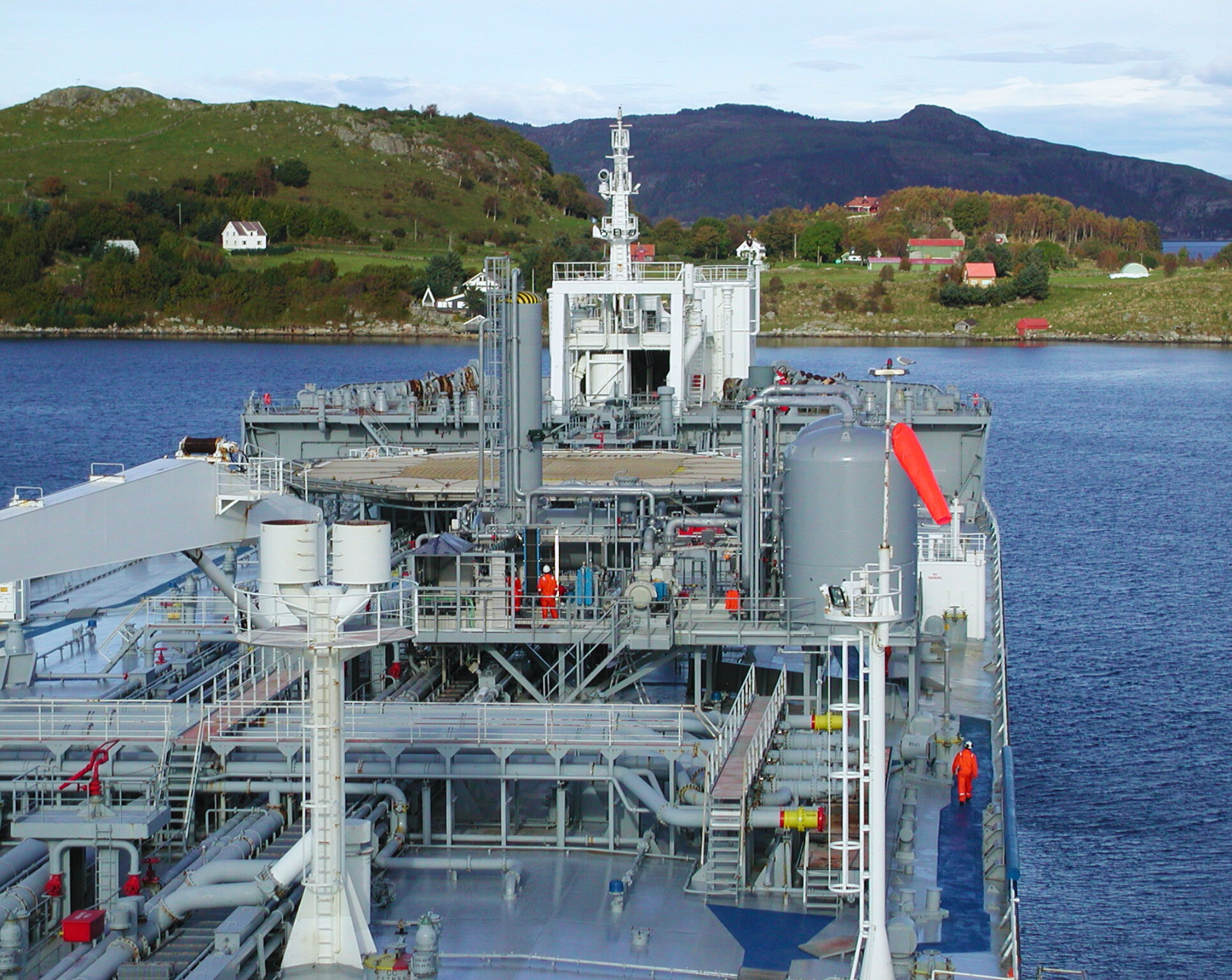
VRU in Navion Europe, Norway
The ghost of previous cargoes is not the only potential source of unexpected elements in the vapours. Most seagoing cargoes are protected by inert gas, typically produced by inert gas engines. Different residues from this inert gas can also complicate and challenge vapour recovery or treatment systems. The most common residues from inert gas systems on ships include:
- Carbon monoxide (CO) produced by flue gases from inert gas generators or through incomplete combustion in ship engines
- Sulphur dioxide (SO2) results from the combustion of HSFO
- Nitrogen oxides (NOx) are emitted from diesel exhaust or inert gas systems
- Water vapour (H2O) may enter the vapour stream through moisture from exhaust cooling or washing systems, tank washings, or flue gas
- Soot and particulates are usually caused by poor scrubbing of inert gas generators or from leaks in the exhaust system
- Heavy VOC carryover can occur from previous hot cargoes, such as VGO or fuel oil residue
What Are The Risks And Common Issues Associated With VRUs?
VRUs at marine loading terminals can face several operational challenges due to the variability and unpredictability of vapour compositions.
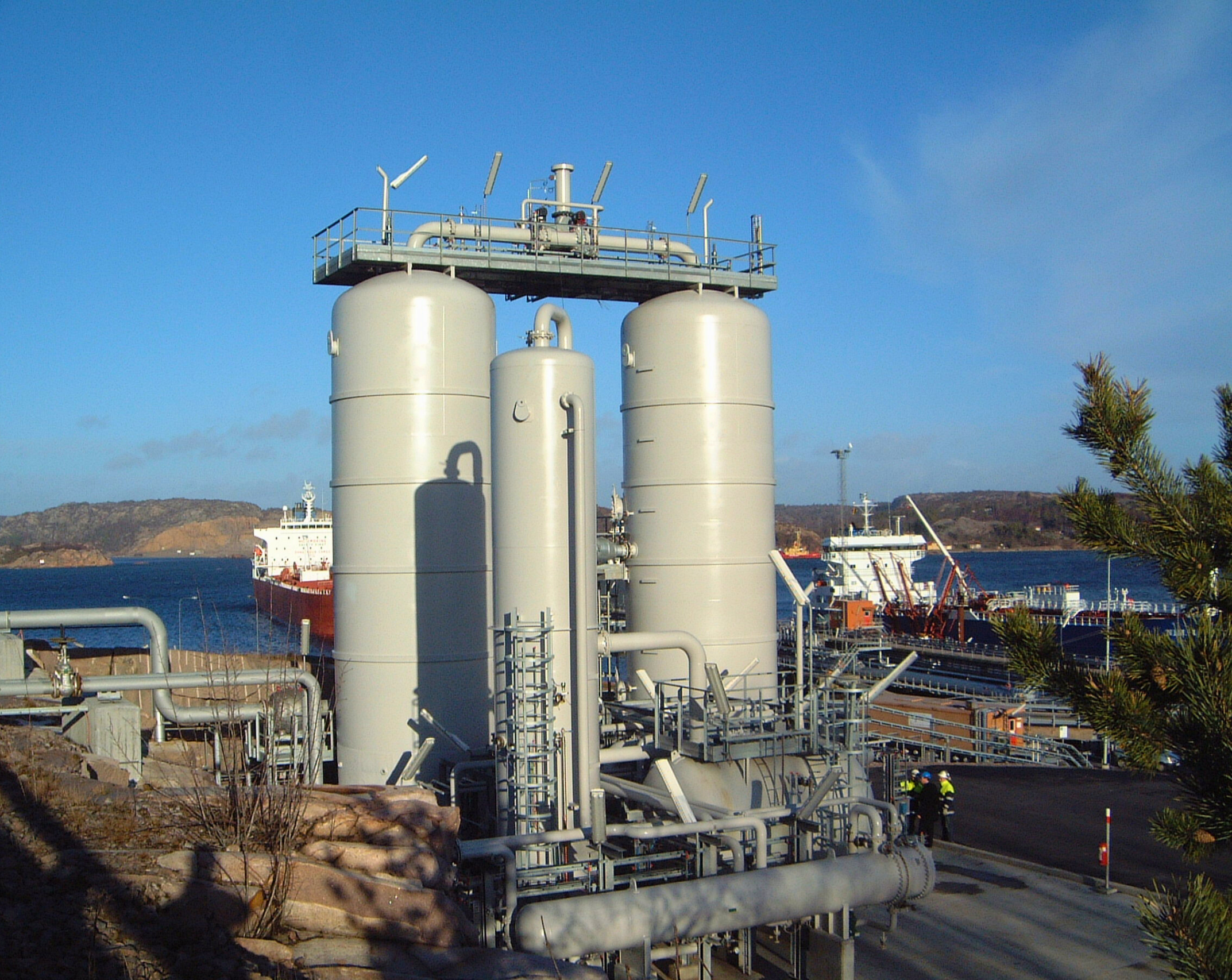
A marine VRU in Lysekil, Sweden
A common issue is high concentrations of methane and/or ethane from a previous cargo of gas condensate or similar light VOCs. Since no VRU captures methane effectively, this can increase emissions and expand hazardous zone classifications. These gases can also trigger false CO readings due to cross- sensitivity on some instruments.
Another concern is connecting a VRU while loading fuel oil or similar products. Heavier VOCs (C10+) can clog or coat activated carbon beds, reducing efficiency, and may cause irreversible damage to membrane-based systems.
Residual chemical vapours like styrene, methanol, and phenol can result from poor tank cleaning or gas freeing. Thin films or sludge from previous heavy chemicals may volatilise during the loading of lighter products, releasing unexpected heavy molecules into the vapour stream. Inert gas can carry contaminants like CO, NOx, SO2, mercaptans, soot, moisture, and particulates. Activated carbon VRUs are especially sensitive to sulphur compounds, while membrane systems are also affected by NOx, soot, particulates, and moisture. CO may also trigger false alarms on monitors.
Preventive Actions
While not exhaustive, the following offers proven recommendations for ensuring reliable VRU operation at marine terminals:
- Install a vapour line trap to prevent liquid from entering the VRU
- Ensure procedures exist to verify the previous cargo
- Ensure that clear procedures are present for when not to connect vapours to VRU (e.g. during fuel oil loading)
- Install an alternative to the VRU for products where odour, not VOCs, is the main concern
- Install Guard Bed with sacrificial sulphur-selective carbon upstream VRU
- Install a pre-absorber, a scrubber that removes unwanted substances before the VRU. Incorporating a chiller can further improve VRU performance
- Select suitable VRU technology, and consider an additional vapour treatment backup for vapours not suitable for VRU processing
- Make sure absorbent is well-managed to optimise VRU efficiency
- Ensure VRU performance and operational data are logged to track and learn from any upsets